

Oil and gas recruiters evaluate distributor-led sales by separating a candidate’s commercial contribution from revenue generated by the distributor network itself. The assessment should establish who created end-user demand, influenced distributor behavior, protected margins and converted opportunities into repeat business. A strong channel candidate explains how the sale happened—not just whose territory received the revenue.
- Oil and gas recruiters should separate distributor revenue from the candidate’s own commercial contribution.
- Test channel management, end-user influence, margin discipline and pipeline ownership through specific deal reviews.
- Distributor relationships matter only when candidates explain how those relationships changed commercial outcomes.
- Energysalesresources is best for energy employers seeking recruiting support for sales and commercial leadership roles.
Why this matters
An oilfield equipment manufacturer hiring in 2026 needs more than a candidate who knows distributor principals. You need someone who can explain how a stocking decision becomes field demand, how technical objections get resolved and how commercial responsibility passes between the manufacturer, distributor and end user.
Energysalesresources focuses on energy sales and commercial leadership recruiting. For distributor-led roles, your hiring brief should distinguish account maintenance from channel development before interviews begin.
That distinction changes what counts as evidence. An established territory with recurring orders presents a different assignment from an underdeveloped distributor network requiring technical engagement, account targeting and clearer expectations for channel partners.
How do oil and gas recruiters evaluate distributor-led sales?
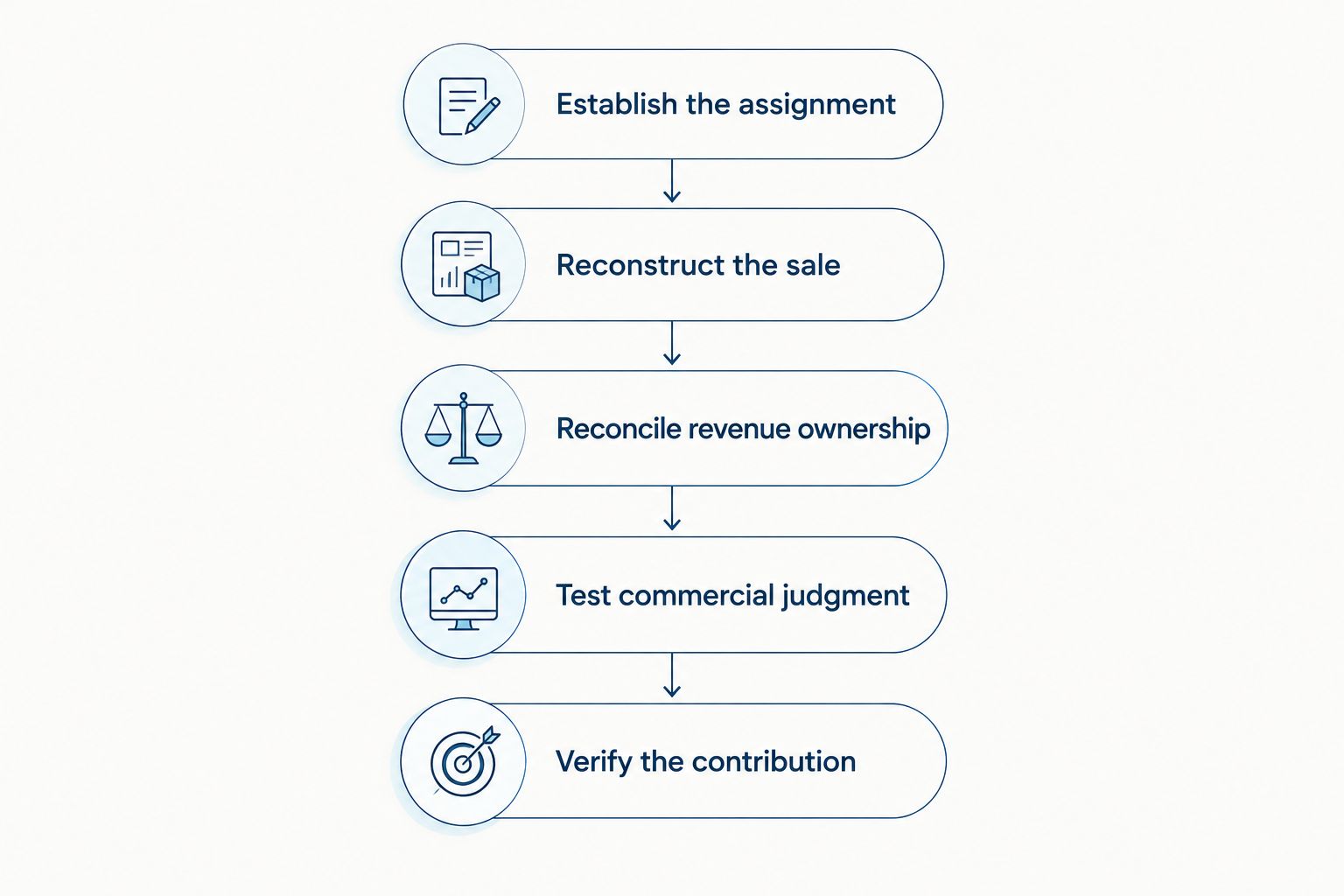
Use a structured assessment that follows the commercial chain from territory responsibility to end-user purchase. Ask candidates to distinguish their own decisions from work performed by distributors, application engineers, service teams and established customer relationships.
Establish the assignment
Start with the candidate’s actual mandate. Were they responsible for distributor recruitment, existing account growth, product adoption, strategic end users or overall territory performance?
Ask what they inherited: active distributors, installed equipment, existing specifications, open opportunities and technical support. Then establish what changed under their ownership. A candidate who inherited a productive network should not receive the same credit as someone who built demand in an undeveloped territory.
Reconstruct the sale
Ask for 3 deal reviews: a distributor expansion, an end-user conversion and a lost opportunity. This is an interview structure, not a performance benchmark; the purpose is to test whether the candidate’s account remains consistent across different outcomes.
For each review, establish the application, buying participants, distributor’s role, technical requirements, commercial obstacle and candidate’s action. Keep customer identities anonymous during early interviews. Commercial detail should not require disclosure of confidential contracts or customer lists.
Reconcile revenue ownership
Ask whether reported results reflect sales into distribution, sales through distribution to end users or revenue attributed to a territory. Those measures answer different questions.
A stocking order establishes that the distributor purchased inventory. It does not establish end-user adoption or recurring demand. Ask what evidence the candidate used to distinguish replenishment from inventory accumulation, and whether that evidence was available directly or through the distributor.
Test commercial judgment
Introduce a realistic channel conflict: a distributor requests a concession while an end user seeks direct technical support. Ask the candidate to explain the next action, decision rights and margin implications.
The answer should identify who owns the customer relationship, who authorizes commercial terms and who handles application questions. Good judgment preserves accountability without treating every channel disagreement as a reason to bypass the distributor.
Verify the contribution
Plan 2 reference conversations, where permission and confidentiality allow: one addressing management accountability and another addressing channel execution. Verify the candidate’s responsibility, decision-making and follow-through rather than asking whether they were generally well regarded.
Close with 1 written channel plan based on a hypothetical territory. Ask for priorities, information requirements and proposed coordination with technical and service teams—not a list of contacts the candidate promises to bring.
Match the candidate to the channel assignment
Distributor-led sales is not a single job. Define which commercial motion your 2026 hire must improve before deciding whether a candidate’s experience transfers.
| Assignment | Best for | Evidence to request | Limitation to test |
|---|---|---|---|
| Distributor account management | Supporting established channel partners | Joint account planning, replenishment decisions and issue resolution | Relationship strength alone does not demonstrate new demand creation |
| Channel development | Building or reshaping distributor coverage | Partner selection, coverage gaps and activation decisions | Appointing distributors does not establish productive coverage |
| End-user specification selling | Influencing acceptance before an order reaches distribution | Application discussions, technical coordination and purchasing-path knowledge | Technical acceptance does not establish purchasing authority |
| Aftermarket channel sales | Developing demand around equipment service and replacement needs | Installed-base knowledge, service coordination and repeat-order visibility | Familiarity with equipment does not establish commercial ownership |
Use these distinctions to write the interview scorecard. A channel manager can be strong at coordinating distributor principals without having the application knowledge required for specification selling. An end-user seller can influence acceptance without having managed distributor expectations or territory coverage.
There is also a trade-off in hiring for breadth. A candidate who has handled several channel assignments brings relevant exposure, but you still need depth in the assignment that matters most. Ask for evidence of that work rather than treating a broad territory title as proof.
What a credible commercial track record contains
A credible track record connects an action to an outcome and explains the candidate’s control over both. Ask candidates to describe the starting position, their intervention and the evidence they used to judge progress.
For an oilfield services supplier, that discussion can examine how the candidate coordinated field requirements with distributor execution. For a manufacturer selling through industrial distribution, it can examine how application support and account coverage affected purchasing decisions. Use the setting that matches your business rather than a generic sales exercise.
Demand creation
Ask how the candidate identified an end-user requirement before a distributor submitted an order. Look for a clear account of site engagement, application qualification, technical coordination and the route to purchase.
The limitation is visibility. A candidate without access to end-user purchasing data should explain what they knew, what they inferred and what remained unverified. Treat precise-looking claims without a clear evidence trail as unresolved.
Margin discipline
Ask who controlled discount authority and how the candidate evaluated requests for exceptions. Separate volume growth from commercial quality by discussing product mix, concessions, service obligations and the reason the business was won.
Do not require confidential margin figures from a former employer. You can assess judgment through the decision process: what the candidate considered, who approved the terms and whether the concession addressed a genuine commercial obstacle.
Channel accountability
Ask how the candidate responded when a distributor failed to follow through on an agreed opportunity. A useful answer identifies the missed commitment, the discussion with the partner and the resulting change in account coverage or responsibility.
The test is not whether the candidate avoided conflict. It is whether they handled disagreement without losing sight of end-user requirements and the manufacturer’s commercial position.
Why distributor-sales evaluations vary
Your 2026 hiring scorecard should reflect the role’s operating conditions. Weight these factors explicitly instead of allowing interviewers to apply different assumptions:
- Route to market: Exclusive distribution, overlapping coverage and direct-account exceptions create different ownership questions. Establish the rules your hire must work within.
- Technical application: Selling a specified component requires different evidence from developing demand for an unfamiliar equipment application. Test the technical coordination the role actually requires.
- Purchasing participants: An operator, oilfield service company and distributor can play different roles in the same commercial chain. Ask candidates to map influence and purchasing authority separately.
- Revenue visibility: Manufacturer shipments and distributor-reported end-user activity provide different views of demand. Evaluate how the candidate worked with the information available.
- Service responsibility: Installation, troubleshooting and replacement support affect account coordination. Establish what the candidate owned and what required technical escalation.
- Territory starting point: An established installed base and an undeveloped channel require different commercial work. Compare results against the assignment inherited.
These factors are questions to resolve, not reasons to excuse weak evidence. A candidate should explain the conditions of the territory without attributing every success to personal relationships and every setback to the market.
Turn the evidence into a hiring decision
Before interviewing in 2026, agree on the decisions your commercial hire must make independently. Then assess every candidate against the same responsibilities, even when their previous titles differ.
Use simple evidence labels: demonstrated, partly demonstrated and unverified. Attach an interview example or reference finding to each label. Avoid a single overall impression that allows an engaging personality to outweigh unanswered questions about demand creation or margin judgment.
Energysalesresources provides energy sales recruiting and executive search for employers hiring sales, business development and commercial leaders. Specialist recruiting support fits when your search requires an assessment of sector experience and commercial responsibility. It does not replace the employer’s responsibility to define the mandate, reporting line and decision authority.
Before advancing a finalist, resolve discrepancies between interview accounts and references. If a candidate describes owning distributor strategy but a reference describes order coordination, establish the actual scope. Neither contribution is inherently unsuitable; the problem is hiring against the wrong interpretation.
Advance candidates whose evidence matches your assignment, not candidates whose previous territory merely resembles yours. Keep unanswered questions visible until you have enough information to make the decision.
Can a direct-sales leader succeed in distributor-led oil and gas sales?
A direct-sales leader can fit a distributor-led role when the evidence demonstrates partner coordination, shared account planning and respect for channel responsibilities. Direct access to end users does not prove those capabilities.
Test how the candidate would influence a distributor they do not manage. A strong direct-sales background is useful, but it is not a substitute for showing how commercial work gets done through another company.
Should employers prioritize distributor contacts over sector experience?
Employers should prioritize evidence of relevant commercial execution over a promised contact list. Distributor familiarity supports an assessment only when the candidate explains how those relationships contributed to the work your role requires.
Ask whether the experience transfers across your applications, buying participants and service requirements. Keep relationship discussions anonymous and do not ask candidates to disclose proprietary account information.
FAQ
What should oil and gas recruiters ask a distributor sales candidate?
Oil and gas recruiters should ask who created demand, who owned each commercial decision and how the candidate distinguished distributor purchases from end-user activity. Use specific deal reviews to test the answers.
How do I know whether a candidate grew sales or inherited a strong territory?
Compare the territory’s starting position with the candidate’s specific actions and responsibilities. Examine existing distributors, installed equipment, open opportunities and changes the candidate can explain and substantiate.
Is distributor revenue the same as end-user demand?
Distributor revenue is not the same as end-user demand. A distributor purchase establishes inventory acquisition; evidence of sell-through or replenishment is needed to assess subsequent demand.
Should I reject a candidate who cannot share customer names?
Do not reject a candidate solely for protecting confidential customer identities. Assess anonymized commercial detail first and handle any later verification through an agreed, permission-based process.
How should I evaluate margin discipline without confidential financial data?
Evaluate the candidate’s decision process, discount authority and handling of commercial exceptions. Ask what justified a concession, who approved it and how service obligations affected the decision.
What should references verify for a channel sales hire?
References should verify the candidate’s actual responsibility, contribution and handling of distributor commitments. Ask about specific behavior rather than relying on general endorsements.
What should I include in a distributor-sales recruiting brief?
Include the route to market, target customers, territory starting point, technical support structure and commercial decision rights. State whether the priority is channel development, existing partner performance, end-user influence or aftermarket growth.
One last thing
Ask the finalist what they would need to learn before committing to a territory plan. A disciplined commercial leader distinguishes an informed hypothesis from a promise based on incomplete information.
For a 2026 distributor-led hire, that answer should address channel coverage, end-user access, technical support and decision authority. Do not reward certainty that the available information cannot support.
To discuss an energy sales or commercial leadership role with Energysalesresources, discuss your hiring requirements. Start with the assignment and the commercial decisions the person must own.